
Protection of Cultural Heritage

 “Protection of Cultural Heritage” programme called “HERITAGE” is a three-year programme funded by the European Union under the “Support to Governance and Stabilization in Libya – Special Measure 2023”. The Programme contributes to addressing the structural challenges of cultural heritage conservation in Libya, where years of conflict, political instability and neglect have seriously endangered monuments […]

Temps de lecture:

1 min

 “Protection of Cultural Heritage” programme called “HERITAGE” is a three-year programme funded by the European Union under the “Support to Governance and Stabilization in Libya – Special Measure 2023”.

The Programme contributes to addressing the structural challenges of cultural heritage conservation in Libya, where years of conflict, political instability and neglect have seriously endangered monuments and sites. The lack of restoration expertise, training facilities and skilled professionals further hampers effective preservation.

Officially launched in February 2025, HERITAGE is implemented by the Italian Agency for Development Cooperation (AICS) within the framework of Delegated Cooperation initiatives, in partnership with the Istituto Centrale di Restauro (ICR), Rome, and in close cooperation with the Libyan Department of Antiquities.

Duration: 3 years (2025–2028)

Where: Libya

EU Contribuition: € 2.2 million

Funded by:Contribution Agreement  N° 700002630

Sustainable Development Goals:
4 – Quality Education
11 – Sustainable Cities and Communities
17 – Partnerships for the Goals

Goals and expected results

  • Roadmap for establishing a Restoration School: including an architectural restoration plan for the hosting building, which will be located near Leptis Magna (Khoms Municipality), a sustainability strategy, and an institutional framework defining governance, curricula, legal aspects and financial viability. The roadmap will be developed through continuous consultation with the relevant stakeholders.
  • Capacity building on conservation: training courses for technicians from the Libyan Department of Antiquities and students from Libyan Universities, including both theoretical and on-the-job modules focused on mosaics, wall paintings and archaeological structures conservation.

  • Around ten stakeholder sessions on innovative restoration, governance, legal frameworks, curricula and financial sustainability aimed at defining the Restoration School roadmap.
  • Three 6-months long capacity building sessions involving 20 trainees each from the Department of Antiquities and Libyan universities’ student communities.
  • Two workshops (one in Italy, one in Libya) on cultural heritage conservation, including the presentation of trainees’ results.
  • A one-week study visit in Italy for the trainees.

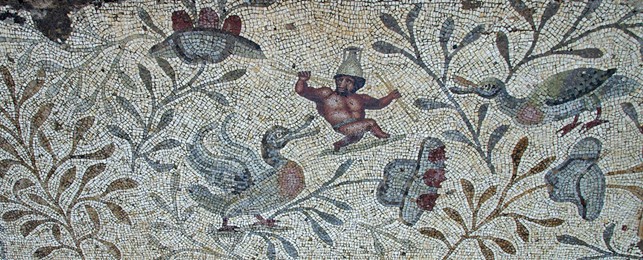
Mosaics of Villa Silin, Khoms, Libya, one of the locations of the capacity building sessions

  • Gianluca Solera, Team Leader – gianluca.solera@aics.gov.it
  • Angela Ferraro, Admin & Finance Manager of the EU- funded programs in Libya – angela.ferraro@aics.gov.it

Dernière mise à jour: 02/02/2026, 16:58